AI in dentistry is changing how clinics diagnose, schedule, and retain patients. Learn what the technology actually does, which tools lead the market, and how dental practices can use AI to grow

Alexander
AI for Dental Clinics
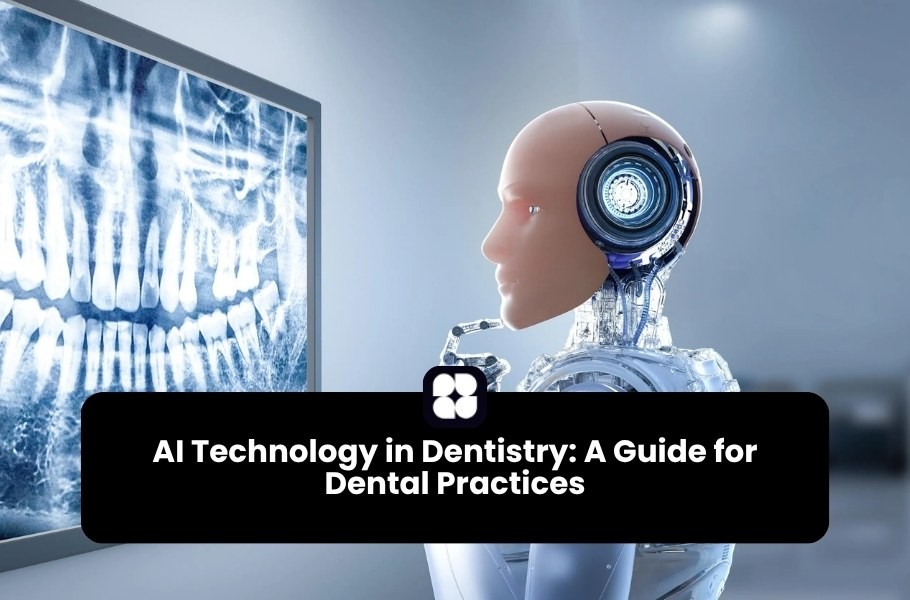
Dentists are hearing about AI constantly right now. Software vendors are pitching tools. Practice management platforms are adding "AI features." And most dental teams are left wondering — what does any of this actually do for my clinic?
This guide breaks it down without the hype. You will learn what AI is doing in dentistry today, which clinical tools are leading the space, and just as importantly why most practices that adopt AI still struggle with the same operational problems.
What AI in Dentistry Actually Means
AI in dentistry is not one thing. It covers a range of technologies, each doing something different. At the clinical end, AI helps dentists read images faster and more consistently. Algorithms trained on millions of radiographs can flag cavities, bone loss, and other conditions directly on the X-ray. This is called computer-aided detection (CAD), and the best platforms are FDA-cleared.
At the operational end, AI handles the work your front desk does manually — answering calls, booking appointments, sending reminders, following up with patients who did not reschedule.
Most discussions of AI in dentistry focus on the clinical side. But for the average independent or group practice, the operational side is where AI delivers the most immediate return.
The Clinical Side: What AI Does With Dental Imaging
AI-Powered Radiograph Analysis
This is the most talked-about application. Platforms like Overjet, Pearl (Second Opinion), and VideaHealth use deep learning to analyze bitewings, periapical films, and panoramic X-rays in real time.
What they detect:
Early-stage cavities (caries)
Alveolar bone loss for periodontal assessment
Periapical radiolucencies
Calculus buildup
Restoration failures
These tools overlay color-coded findings directly onto the radiograph. The dentist sees what the AI flagged before the conversation with the patient begins.
Why it matters for case acceptance: When a patient sees a color-coded overlay showing exactly where bone loss or decay is, they understand the diagnosis. They are more likely to say yes to treatment. Multiple practices report measurable increases in case acceptance after adding AI imaging tools.
AI and CBCT / 3D Imaging
Cone beam CT (CBCT) produces 3D images of the jaw, teeth, and surrounding structures. Analyzing CBCT data manually is time-intensive. AI platforms like Diagnocat and Pearl's Second Opinion 3D can automatically identify anatomical structures — the inferior alveolar canal, maxillary sinus, nasal space, and more — reducing the time clinicians spend on image review.
For implant planning in particular, this changes the workflow. What used to take careful manual measurement can now be flagged and prepared before the planning session begins.
AI in Orthodontics
DentalMonitoring is the clearest example here. Patients take intraoral scans at home using a smartphone and a small scanning device. AI reviews the scans and tracks tooth movement against the treatment plan. The orthodontist gets alerts when something is off — without the patient needing a chair visit.
This reduces unnecessary appointments, flags compliance issues early, and gives orthodontists data they would not otherwise see between visits.
AI for Smile Design and Cosmetic Planning
Tools like Kapanu use augmented reality to simulate cosmetic outcomes. A patient can see what their smile might look like after veneers or other aesthetic treatment before any work begins. This builds trust and makes the consultation more concrete for patients who struggle to visualize outcomes from descriptions alone.
The Operational Side: Where Most Practices Leave Money Behind
Here is what the clinical AI conversation often misses.
A dental practice can have the best diagnostic imaging AI on the market and still lose patients at every other step of the journey. Missed calls go to voicemail. Online inquiries sit in an inbox. Appointment reminders go out once and get ignored. Post-treatment follow-ups do not happen.
These are not technology failures. They are systems failures. And this is where AI can do more for most practices than any imaging upgrade.
What Operational AI Covers
Appointment scheduling and booking automation. AI tools can handle booking requests coming in through your website, Google, or social channels — at any hour, including weekends and evenings when your front desk is not available. Every missed call that would have gone to voicemail is now captured.
Patient reminders and no-show reduction. Automated sequences — SMS, email, or even WhatsApp — remind patients before appointments, confirm attendance, and reschedule no-shows without staff involvement. This alone is worth significant time each week for most front desk teams.
Follow-up and reactivation. Patients who missed a recall appointment, did not complete a treatment plan, or simply went quiet after a visit can be re-engaged through automated sequences. This is revenue sitting in your database that most practices never recover.
Review generation. Positive reviews on Google directly affect how your clinic appears in local search and AI-generated recommendations. Automated post-visit requests — timed correctly and personalized — consistently increase review volume.
24/7 patient inquiry handling. An AI assistant on your website or social channels can answer common questions (insurance, services, hours), capture new patient details, and book appointments without any staff input.
How AI Improves Patient Acquisition and Local Visibility
Most clinics think about AI as something that helps once a patient is already in the chair. But AI also changes how patients find your practice in the first place.
Local SEO and AI search visibility are now inseparable. When someone searches "dentist near me" or asks an AI tool like ChatGPT or Perplexity for a recommendation, the practices that get surfaced are the ones with strong local signals — consistent information across directories, recent positive reviews, and content that directly answers patient questions.
AI-driven content systems can maintain your blog, Google Business Profile posts, and social presence consistently — the kind of regular activity that search engines and AI recommendation engines associate with active, trustworthy practices.
This is not about replacing your voice. It is about making sure your practice shows up when and where patients are looking.
The Key Players in Dental AI Software (2026)
If you are researching clinical AI tools, here is a clear breakdown of who leads the space:
Platform | Primary strength | FDA cleared |
Overjet | Bone level quantification, DSO deployments, insurance documentation | Yes |
Pearl (Second Opinion) | 2D + 3D radiograph analysis, PMS integrations | Yes (2D + 3D) |
VideaHealth | Caries detection, academic partnerships, diagnostic consistency | Yes |
Denti.AI | Automated charting + radiograph analysis, workflow documentation | Varies by market |
DentalMonitoring | Remote orthodontic monitoring via smartphone | CE + FDA |
Diagnocat | CBCT analysis, implant planning, anatomical segmentation | CE cleared |
All of these platforms do one or two things very well. None of them solve the operational and patient journey problems that most practices face every day.
Why Adding AI Tools Does Not Always Fix the Problem
This is the honest part of the conversation.
Most dental practices that adopt AI end up with a collection of tools that do not talk to each other. The imaging AI connects to the X-ray software. The scheduling bot lives on the website. The reminder system is a separate subscription. And the team still has to manually move information between all of them.
The result is that staff workload does not actually go down. Leads still slip. The phone still gets missed. And the practice owner is still managing it all.
The issue is not the tools — it is that AI is being added on top of disconnected systems rather than built into how the practice actually runs.
This is the core problem our team at Symbiotic AI is trying to solve. We do not sell software licenses and disappear. We map the entire patient journey — from first inquiry to post-treatment follow-up — and build AI systems that work together as one workflow, not a stack of separate tools.
What a Well-Built AI System Looks Like for a Dental Clinic
When AI is set up correctly for a dental practice, this is what changes:
New patient flow. A prospective patient finds your clinic through Google or a referral, visits your website at 9 PM, asks a question through the AI assistant, and books an appointment — all before your front desk opens in the morning. No lead lost.
Appointment management. Bookings, confirmations, and rescheduling happen automatically. No-show rates drop because the reminder sequence is consistent and follows up until the patient responds.
Post-visit follow-up. After a patient leaves, an automated sequence checks in, requests a review if the patient is satisfied, and flags any unfinished treatment plans for follow-up. This happens without any staff action.
Visibility and content. Your Google Business Profile stays active. Your local SEO improves. Your practice appears in AI-generated search results because your online presence signals credibility and activity.
Staff experience. Your front desk team is not spending time on tasks a system can handle. They are focused on patients who are actually in the clinic.
Questions Patients and Dentists Ask About AI in Dentistry
Can AI detect cavities better than a dentist?
AI imaging tools are highly accurate at flagging radiographic findings — in some studies, exceeding average clinician consistency. But accuracy alone is not the point. The real value is consistency: AI does not have a bad day, it does not get fatigued, and it reviews every image the same way. The dentist still makes the clinical decision. AI just ensures nothing gets missed.
Will AI replace dentists?
No. AI handles pattern recognition, documentation, scheduling, and communication. Clinical judgment, patient relationships, and hands-on treatment are not replaceable. What AI changes is how much time a dentist spends on tasks that do not require their training.
Is dental AI software FDA cleared?
Some of it is. Overjet, Pearl, and VideaHealth have all received FDA clearance for specific diagnostic functions. This is an important distinction when evaluating clinical tools — FDA clearance means the software has been reviewed for safety and accuracy in a clinical setting.
How long does it take to implement AI in a dental practice?
For clinical imaging tools, integration typically takes a few days to a few weeks, depending on your existing software setup. For full operational AI the kind that covers your patient journey end to end expect a few weeks for mapping and build, with the system running and improving from there.
Does AI improve patient retention?
Yes, when it is applied to the patient journey rather than just the appointment itself. Automated follow-ups, recall reminders, and post-treatment check-ins keep patients engaged between visits. Practices that implement consistent post-visit communication see measurable improvements in rebooking rates.
Summary
AI automation in dentistry is real and it is working. Clinical imaging tools are giving dentists a sharper, more consistent second opinion on every radiograph. Operational AI is removing the manual work that drains front desk teams and lets leads fall through the cracks.
But the practices getting the most out of AI are not the ones that bought the most tools. They are the ones that built AI into how the practice actually runs as one connected system, not a collection of subscriptions.
If you want to understand where your practice is losing patients and what a built-for-you AI system would actually look like, that is exactly what we do.
