Discover the top AI use cases in hospitality, from guest communication and personalization to revenue management, staffing, and operational efficiency.

Alexander
AI in Hospitality
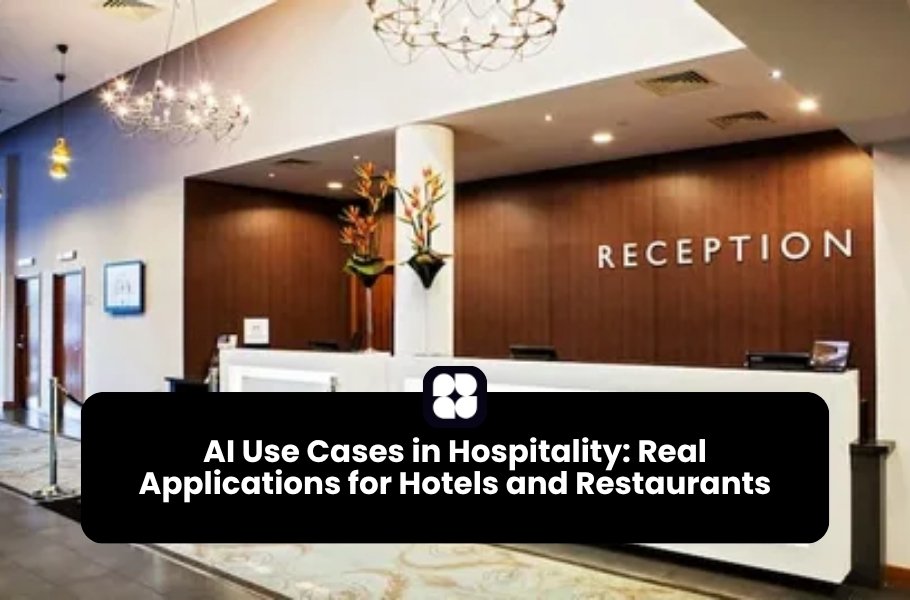
The hospitality industry has always depended on service, efficiency, and guest satisfaction. Whether it is a hotel, restaurant, resort, event venue, or hospitality group, every interaction affects the guest experience and the profitability of the business.
Today, artificial intelligence is becoming part of daily hospitality operations. Businesses are using AI to improve communication, automate repetitive tasks, manage revenue, understand guest preferences, and support staff. The goal is not to replace people. The goal is to help teams work more efficiently while providing better service to guests.
As guest expectations continue to rise, hospitality businesses are looking for practical ways to deliver faster service, reduce operational costs, and create more personalized experiences. This is where AI is making a measurable impact.
Why AI Matters in Hospitality
Hospitality businesses handle large amounts of data every day. Reservations, guest profiles, online reviews, booking patterns, purchasing habits, staffing schedules, and customer inquiries all generate valuable information.
AI helps businesses process this information quickly and turn it into actionable insights. Instead of relying entirely on manual processes, hospitality teams can use AI to identify trends, automate workflows, and make better decisions.
This allows staff to spend less time on administrative work and more time focusing on guest relationships and service delivery.
AI-Powered Guest Communication
One of the most common uses of AI in hospitality is guest communication.
Hotels and restaurants receive questions around the clock. Guests want information about reservations, opening hours, room availability, amenities, menus, parking, check in procedures, and special requests.
AI powered chat systems can respond instantly to common questions through websites, mobile apps, social media platforms, and messaging channels. This provides guests with immediate assistance while reducing the workload on front desk and customer service teams.
The benefit is faster response times and a more consistent guest experience, especially during busy periods.
Personalized Guest Experiences
Personalization has become a major competitive advantage in hospitality.
AI can analyze previous bookings, spending patterns, dining preferences, loyalty program activity, and guest feedback to create more personalized experiences.
A hotel may recommend room upgrades based on a guest's travel history. A restaurant may suggest menu items based on previous orders. A resort may offer activities that match a guest's interests.
These personalized recommendations help businesses increase guest satisfaction while creating additional revenue opportunities.
Revenue Management and Dynamic Pricing
Revenue management is one of the most valuable AI applications in hospitality.
Demand changes constantly based on seasons, local events, holidays, weather conditions, and competitor pricing. Managing rates manually can be difficult and time consuming.
AI systems can analyze market conditions in real time and recommend pricing adjustments based on expected demand. This helps hotels maximize occupancy while protecting revenue.
For restaurants and event venues, AI can help identify peak demand periods, optimize booking availability, and improve capacity utilization.
Many hospitality businesses use AI pricing strategies to increase profitability without requiring constant manual intervention.
AI for Reservation and Booking Management
Managing reservations is another area where AI delivers significant value.
Hospitality businesses often deal with cancellations, no-shows, overbooking risks, and changing customer preferences. AI can analyze booking trends and help predict future demand.
Advanced systems can automatically recommend availability adjustments, waitlist management strategies, and booking allocations.
For restaurants, AI can help optimize seating arrangements and booking schedules. For hotels, it can improve room allocation and occupancy planning.
The result is better use of available capacity and improved operational efficiency.
Review Monitoring and Reputation Management
Online reviews play a major role in hospitality success.
Guests frequently share experiences on review websites, travel platforms, and social media. Monitoring thousands of reviews manually can be challenging.
AI can analyze customer feedback, identify recurring issues, detect sentiment trends, and highlight areas requiring attention.
Management teams can quickly understand what guests appreciate and where improvements are needed. This allows businesses to respond faster and make informed operational decisions.
Review analysis also helps identify service trends that may otherwise go unnoticed.
Workforce Planning and Staff Scheduling
Labor costs are one of the largest expenses in hospitality.
AI can help managers create more efficient staffing schedules by analyzing booking forecasts, historical demand, seasonal trends, and expected guest volumes.
Instead of relying on guesswork, businesses can align staffing levels with actual demand.
This helps reduce unnecessary labor expenses while ensuring sufficient coverage during busy periods. Staff members also benefit from more predictable scheduling and improved workload distribution.
Predictive Maintenance
Maintenance issues can negatively affect both operations and guest satisfaction.
AI systems can monitor equipment performance and identify signs of potential failure before a breakdown occurs.
Hotels can use predictive maintenance for elevators, HVAC systems, kitchen equipment, refrigeration units, and other critical assets.
By addressing issues before they become major problems, businesses can reduce repair costs, minimize downtime, and avoid disruptions to guest experiences.
AI for Restaurant Operations
Restaurants are increasingly using AI to improve both front-of-house and back-of-house operations.
AI can help forecast demand, optimize inventory levels, reduce food waste, and improve menu planning. It can also assist with order management and customer communication.
Some restaurants use AI to analyze sales patterns and identify the most profitable menu items. Others use it to improve staffing decisions and manage peak service periods more effectively.
These applications help restaurants operate more efficiently while maintaining service quality.
Multilingual Guest Support
Hospitality businesses serve guests from many countries and language backgrounds.
AI powered translation and communication tools allow businesses to support guests in multiple languages without requiring large multilingual teams.
This improves accessibility and helps international guests feel more comfortable throughout their stay.
Providing support in a guest's preferred language can significantly improve satisfaction and reduce misunderstandings.
Unified Guest Data and Customer Insights
Many hospitality organizations struggle with fragmented systems.
Guest information is often spread across reservation platforms, loyalty programs, point of sale systems, marketing tools, and customer service platforms.
AI performs best when it has access to complete and accurate data.
By connecting guest information across the organization, businesses can build a more complete understanding of customer behavior. This enables better personalization, stronger marketing campaigns, and improved decision-making.
Challenges of AI Adoption in Hospitality
Although AI offers significant benefits, successful implementation requires planning.
Businesses must address data quality, system integration, privacy requirements, staff training, and operational readiness. AI systems are only as effective as the information they receive.
Organizations that focus on clear business objectives and practical use cases typically achieve better results than those pursuing technology without a defined strategy.
The Future of AI in Hospitality
AI is becoming an important part of modern hospitality operations. From guest communication and personalization to revenue management and workforce planning, its role continues to expand.
The most successful hospitality businesses will not be those that automate everything. They will be the businesses that combine technology with exceptional human service.
AI automation services can help staff work more efficiently, make better decisions, and deliver more personalized experiences. When implemented correctly, it becomes a tool that strengthens hospitality rather than replacing it.
As guest expectations continue to evolve, AI will play an increasingly important role in helping hospitality businesses remain competitive, profitable, and guest-focused.
